
News
PRESIDENT TINUBU SIGNS EXECUTIVE ORDER FOR DIRECT REMITTANCE OF OIL AND GAS REVENUES TO FEDERATION ACCOUNT

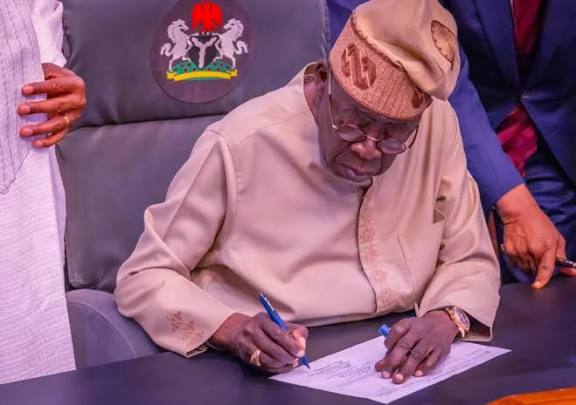
PRESIDENT TINUBU SIGNS EXECUTIVE ORDER FOR DIRECT REMITTANCE OF OIL AND GAS REVENUES TO FEDERATION ACCOUNT
President Bola Tinubu has issued an executive order to safeguard and enhance oil and gas revenues for the Federation, curb wasteful spending, eliminate duplicative structures in this critical sector of the national economy, and redirect resources for the benefit of the Nigerian people.
The President signed the EO in pursuance of Section 5 of the Constitution of the Federal Republic of Nigeria (as amended).
The Executive Order is anchored on Section 44(3) of the Constitution, which vests ownership, control, and derivative rights in all minerals, mineral oils, and natural gas in, under, and upon any land in Nigeria, including its territorial waters and Exclusive Economic Zone, in the Government of the Federation.
The directive seeks to restore the constitutional revenue entitlements of the federal, state, and local governments, which were removed in 2021 by the Petroleum Industry Act (PIA). The PIA created structural and legal channels through which substantial Federation revenues are lost through deductions, sundry charges, and fees.
Under the current PIA framework, NNPC Limited retains 30 per cent of the Federation’s oil revenues as a management fee on Profit Oil and Profit Gas derived from Production Sharing Contracts, Profit Sharing Contracts, and Risk Service Contracts.
In addition, the company retains 20 per cent of its profits to cover working capital and future investments.
Given the existing 20% retention, the additional 30% management fee is considered unjustified by the Federal Government, as the retained earnings are already sufficient to support the functions NNPCL performs under these contracts.
NNPC Limited also retains another 30% of its profit oil and profit gas under the production sharing, profit sharing, and risk service contracts, as the Frontier Exploration Fund under sections 9(4) and (5) of the PIA. A fund of this size, being devoted to speculative exploration, risks accumulating large idle cash balances, which would encourage inefficient exploration spending, at a time when government resources are urgently needed for core national priorities, including security, education, healthcare, and energy transition investments.
There is also the Midstream and Downstream Gas Infrastructure Fund (MDGIF) under Section 52(7)(d) PIA, funded by the collection of gas flaring penalties provided under Section 104. The fund is to be used for supporting environmental remediation and relief for host communities impacted by gas flaring. However, section 103 of the PIA has already established a dedicated Environmental Remediation Fund, administered by NUPRC, specifically designed to fund the rehabilitation of communities negatively impacted by upstream petroleum operations, including gas flaring. Furthermore, Section 103 already imposes a fee on lessees to contribute to this fund for precisely this purpose.
All these deductions far exceed global norms and effectively divert more than two-thirds of potential remittances to the Federation Account. The continuing decline in net oil revenue inflows is largely attributable to these deductions and fragmented oversight under the current PIA architecture.
The Executive Order aims to resolve, among other things, the duplicative 30 per cent deduction for profit-sharing arrangements by addressing overlapping and redundant provisions across all relevant laws and regulatory instruments within the PIA framework and NNPC Limited’s governing structure. The objective is to eliminate unjustified multiple layers of deductions that erode revenues that ought to accrue to the Federation Account, enabling the three tiers of government to pursue critical national priorities.
The President has identified structural concerns regarding the continued role of NNPC Limited as a concessionaire under Production Sharing Contract arrangements. The existing framework, which allows the company to influence operating costs while simultaneously functioning as a commercial entity, creates potential competitive distortions and undermines its transition into a fully commercial operator as envisioned under the PIA.
The Executive Order, therefore, introduces immediate measures to curb leakages, enhance transparency, eliminate duplicative structures, and reposition NNPC Limited strictly as a commercial enterprise, while safeguarding the Federation’s interests.
In rolling out the order, the President affirmed that the reforms are of urgent national importance, given their implications for national budgeting, debt sustainability, economic stability, and the overall well-being of Nigerians.
President Tinubu noted that his administration will also undertake a comprehensive review of the Petroleum Industry Act in consultation with relevant stakeholders to address identified fiscal and structural anomalies.
According to the Presidential Executive Order, which has been officially gazetted, NNPC Limited will no longer collect and manage the 30% Frontier Exploration Fund. NNPC Limited will ensure that the 30% profit from oil and gas from production sharing, profit sharing, and risk service contracts currently earmarked for the frontier exploration fund is henceforth transferred to the Federation Account.
NNPC Limited will also no longer be entitled to the 30% management fee on profit oil and profit gas revenues that should go to the federation account.
In the same vein, all operators/contractors of oil and gas assets held under a production sharing contract shall, from the date of the Executive Order, which is February 13, 2026, pay Royalty Oil, Tax Oil, Profit Oil, Profit Gas, and any other interest howsoever described which is due to the government of the federation directly to the Federation Account.
President Tinubu has also suspended payments of the Gas Flare Penalty into the Midstream and Downstream Gas Infrastructure Fund. The Commission shall, from the date of the Executive Order, pay proceeds from all penalties imposed on operators for flaring gas into the Federation Account and cease payment of such proceeds into the Midstream and Downstream Gas Infrastructure Fund (MDGIF). All expenditure from the MDGIF shall be conducted in line with extant public procurement laws, policies and regulations.
President Tinubu has approved the constitution of a joint project team to execute integrated petroleum operations. The Commission shall serve as the interface with licensees and lessees in respect of integrated operations where upstream and midstream petroleum operations are fully combined.
President Tinubu approved the establishment of an Implementation Committee to oversee and ensure the effective, coordinated implementation of the executive order. The members of the committee include the Minister of Finance and Coordinating Minister of the Economy, the Attorney-General of the Federation and Minister of Justice, the Minister of Budget and National Planning and the Minister of State, Petroleum Resources (Oil). Other members of the Committee are the Chairman, Nigeria Revenue Service; a Representative of the Ministry of Justice; the Special Adviser to the President on Energy; and the Director-General, Budget Office of the Federation. The latter will provide a secretariat to the committee.
Bayo Onanuga
Special Adviser to the President
(Information & Strategy)
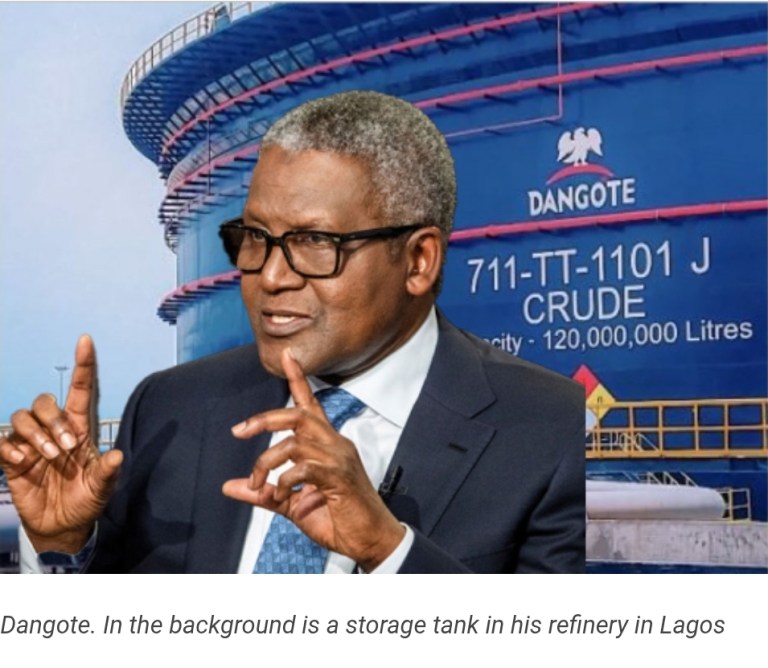
Dangote Refinery Cuts Petrol Price To N1,200/Litre Despite Rising Crude Oil Prices
Dangote Petroleum Refinery & Petrochemicals has reduced its gantry price for Premium Motor Spirit (PMS) to N1,200 per litre, alongside a coastal price of N1,153 per litre, despite rising crude oil prices driven by ongoing tensions in the Middle East
The downward adjustment in ex-depot pricing comes at a time when global oil markets are experiencing upward pressure, with geopolitical instability continuing to impact supply chains, freight costs, and benchmark crude prices.
The price adjustment represents a downward review in the refinery’s ex-depot pricing and is expected to ripple across Nigeria’s downstream sector, potentially easing supply costs for marketers and influencing pump prices at retail outlets. Lower ex-depot prices typically translate into reduced pump prices.
The Middle East crisis has introduced renewed uncertainty into global oil markets, affecting shipping routes, insurance premiums, and supply chains.
For Nigeria, the presence of large-scale local refining capacity is increasingly seen as a stabilising factor, offering some insulation from external shocks even as global market pressures persist.
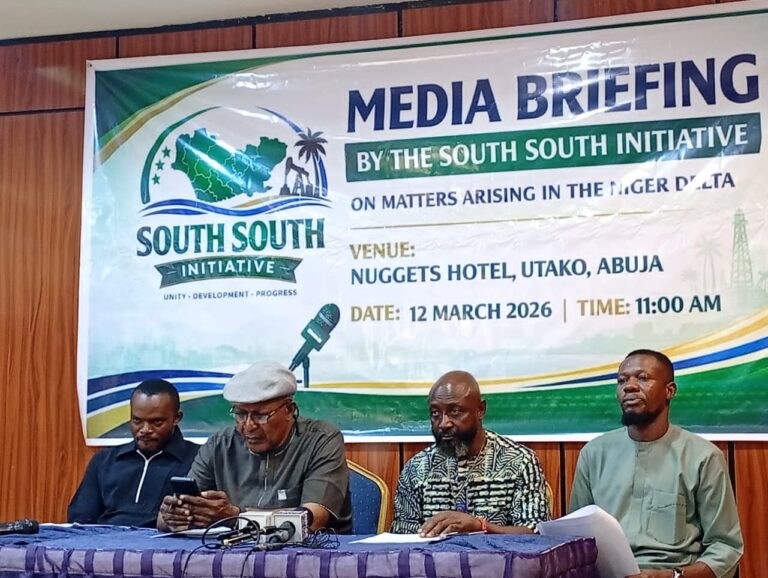
Niger Delta Stakeholders Back Tantita as Nigeria’s Crude Production Climbs to 1.7mbpd
— Stakeholders at the press conference
A coalition of stakeholders under the South South Initiative has called on President Bola Ahmed Tinubu to retain the current pipeline surveillance framework in the Niger Delta, warning that dismantling the system could reverse the significant gains recorded in Nigeria’s oil production and security in the region.
The group made the appeal during a press briefing held on March 12, 2026, where it addressed what it described as growing misinformation surrounding oil pipeline protection contracts currently under scrutiny at the National Assembly. According to the group, Nigeria’s crude oil infrastructure remains the backbone of the country’s economy, and protecting it is critical to national revenue and economic stability.
Citing figures from the Nigeria Extractive Industries Transparency Initiative (NEITI), the group said Nigeria lost approximately 619.7 million barrels of crude oil valued at about $46.16 billion between 2009 and 2020 due to pipeline vandalism, oil theft and illegal refining activities in the Niger Delta. The crisis intensified in 2022 when an additional 36.69 million barrels were reportedly lost in a single year, pushing the oil sector to the brink of collapse.
At the height of the crisis, the country’s effective crude oil output reportedly dropped to around 700,000 barrels per day, far below Nigeria’s OPEC quota and installed production capacity of more than two million barrels per day. The scale of the losses was highlighted by Nigerian investor Tony Elumelu, whose oil assets producing about 58,000 barrels per day reportedly lost up to 97 percent of output to theft syndicates. International oil companies, including Chevron and Shell, responded to the deteriorating situation by declaring force majeure on certain operations and accelerating plans to divest from onshore assets in the Niger Delta.
The group said the situation began to improve after the Federal Government adopted a community-driven pipeline protection strategy that engaged indigenous surveillance firms with strong local networks and knowledge of the terrain. Among the companies operating under this arrangement are Tantita Security Services, Maton Engineering Services and other regional surveillance contractors deployed across different pipeline corridors in the Niger Delta.
According to the South South Initiative, the strategy integrates host communities directly into the protection of critical oil infrastructure, creating legitimate employment opportunities for youths while discouraging involvement in criminal activities. The group stated that in the early phases of the surveillance operations, more than 4,000 illegal refining sites and crude oil theft canals were uncovered and dismantled across the region, while hundreds of illegal pipeline tapping points were identified and sealed. Several major trunk pipelines previously shut down due to vandalism were also restored to operation.
These efforts, the group said, disrupted entrenched criminal networks that had operated across the Niger Delta for years and contributed to a gradual recovery in Nigeria’s oil production. According to the figures presented at the briefing, crude output rose steadily from crisis levels of about 700,000 barrels per day to approximately 1.7 million barrels per day, bringing Nigeria closer to its production targets under the Organization of the Petroleum Exporting Countries (OPEC).
The increase in production has translated into billions of dollars in additional revenue for the country, improved export volumes and renewed investor confidence in Nigeria’s upstream oil sector. The Nigerian National Petroleum Company Limited (NNPC Ltd.) also returned to profitability after years of financial losses, partly due to improved operational stability and reduced crude theft.
The group noted that the recovery has been acknowledged internationally, pointing out that OPEC’s Monthly Oil Market Reports have consistently documented Nigeria’s steady production rebound since 2022 and linked the improvement to enhanced pipeline security and the restoration of previously shut-in facilities. Chevron Nigeria Limited has also publicly acknowledged the improved operating environment in the Niger Delta and recently announced new exploration successes while reaffirming its long-term investment commitment to Nigeria.
The South South Initiative also highlighted the inclusive structure of the pipeline surveillance arrangement. It said that when the pipeline protection contract was first awarded to Tantita Security Services, its leadership convened a meeting in Oporoza, the traditional headquarters of the Gbaramatu Kingdom in Delta State, bringing together community leaders from across the Niger Delta, from Ondo State to Cross River State. At the meeting, surveillance responsibilities were distributed across different ethnic groups and communities along the pipeline routes, with coordinators and subcontractors appointed from various regions to ensure broad participation.
According to the group, this arrangement transformed host communities into stakeholders in protecting national assets while promoting peace and economic engagement among local youths. It expressed concern that individuals who previously benefited from oil theft and illegal refining operations are now attempting to discredit the surveillance system through misinformation campaigns aimed at destabilising the progress achieved.
The group urged the Federal Government to resist pressure to dismantle the current framework and instead strengthen it. It also suggested that if necessary, the government could establish a high-powered independent panel to verify the claims of improved security, reduced pipeline vandalism and increased oil production linked to the surveillance operations.
Drawing comparisons with other oil-producing countries, the group noted that nations such as Saudi Arabia, Iraq, Russia, Algeria, China and Canada invest heavily in securing their oil infrastructure, while NATO countries maintain a dedicated pipeline network protected by specialised security logistics. According to the South South Initiative, no serious nation leaves the protection of its primary economic resource to chance.
The group warned that dismantling the current surveillance system without a carefully designed alternative could risk returning the Niger Delta to the violent era of militancy and widespread pipeline sabotage that once crippled Nigeria’s oil sector and severely reduced national revenues.
It therefore called on President Tinubu to remain steadfast in protecting the gains achieved in the region and to ensure that policies that have contributed to stability and increased production are sustained. The organisation also urged Nigerians to reject propaganda that could undermine the progress recorded in securing the country’s oil infrastructure.
According to the group, Nigeria is already facing multiple economic and security challenges, and destabilising the Niger Delta at this time would only worsen the country’s fiscal and energy situation. The South South Initiative maintained that protecting the country’s oil resources is a collective national responsibility and called on stakeholders to support policies that promote peace, stability and sustainable development in the Niger Delta.
Dangote Refinery raises petrol price from N774 to N874 (more…)
-
 News6 months ago
UK Energy Watchdog Dismisses Dirty Petrol Import Allegations Against Dangote
-
 News6 months ago
NNPCL, Heirs Energies Sustains Gas Supply To Geometric Power
-
Uncategorized6 months ago
Hello world!
-
 News6 months ago
Gas Operators Raises Fear Of Weak Domestic Demand
-
 News2 months ago
Senator Eteng Williams Attends 9th Nigeria International Energy Summit in Abuja
-
 News2 months ago
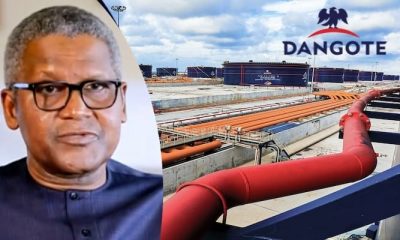
Dangote Refinery Makes History, Becomes First Globally To Hit 650,000 bpd Capacity On CDU, MS Block
-

 News1 month ago
FG Stops NNPC Deductions; Orders Direct Oil Payments To Federation Account
-

 News1 month ago
Oil price spike benefits Nigeria as Saudi refineries, others shut amid US-Iran war