News
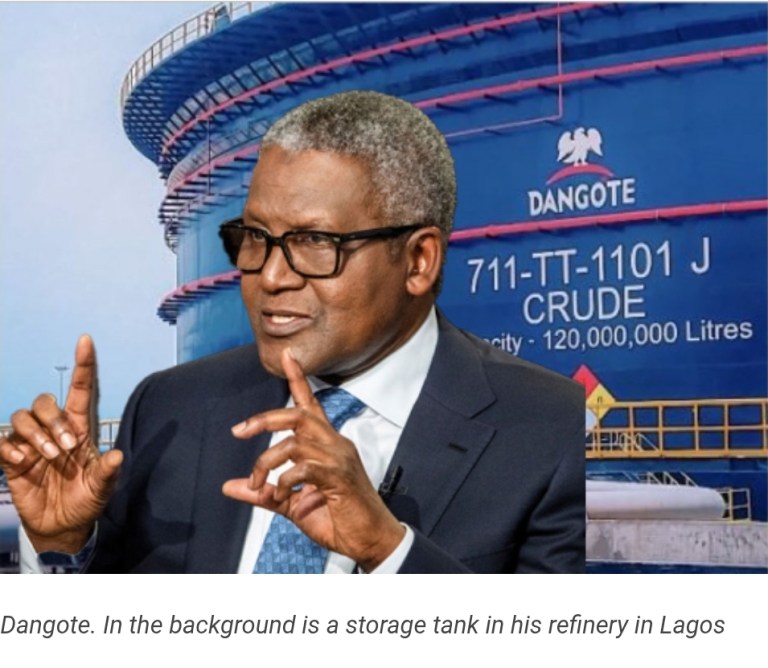
Dangote Refinery Lifts Output To 700,000bpd With Bigger Plans Ahead

Dangote Refinery Lifts Output To 700,000bpd With Bigger Plans Ahead
Dangote Petroleum Refinery & Petrochemicals has increased its crude oil processing capacity to 700,000 barrels per day (bpd) in a performance test conducted by the Process Licensors, marking a significant milestone in the facility’s operational expansion and further cementing its position as World’s Largest Single Train Petroleum Refinery.
The increase sees the refinery surpass its nameplate capacity of 650,000 bpd, underlining the facility’s engineering capability and operational efficiency. The achievement demonstrates the refinery’s ability to process additional feedstock while optimizing performance across its production units
Vice-President for oil and Gas, Dangote Industries Limited, Devakumar Edwin explained that the ramp-up is part of a broader, ambitious strategy to more than double capacity to 1.4 million bpd within 30 months, positioning the facility as potentially the largest refinery globally.
According to him; the expansion is expected to boost Nigeria’s energy self-sufficiency, eliminate the country’s dependence on imported refined products and strengthen its position as a regional export hub pointing out that the Refinery’s growth trajectory reflects a deliberate move toward continental and global refining dominance, not just domestic supply sufficiency.
Owned by Nigerian industrialist and philanthropist, Aliko Dangote, the refinery commenced fuel production in 2024 and has steadily increased output of petrol, diesel, aviation fuel and other refined petroleum products. The facility has rapidly established itself as a major supplier to both domestic and international markets, exporting refined petroleum products to several African countries and key European destinations, including the United Kingdom, France, Spain, Italy, and the Netherlands, among others. It has supplied gasoline to the American market and jet fuel to Saudi Arabia among others.
Dangote Refinery has strengthened its role as a stabilizer in the oil and gas industry given the on-going disruptions caused by the Middle-East tension as a result of which many African countries are now patronizing the Refinery for energy security.
In a further demonstration of its growing global significance, Dangote Petroleum Refinery became the world’s largest exporter of jet fuel in April, according to S&P Global Commodities.
The refinery has played a pivotal role in stabilizing fuel supplies in Nigeria, helping to eliminate dependence on imported petroleum products and easing pressure on the country’s foreign exchange reserves. Its expansion also aligns with broader national objectives to enhance local refining capacity and maximize value from Nigeria’s abundant crude oil resources.
Growing production volumes have also attracted increased interest from global crude suppliers and commodity trading firms, with the refinery sourcing feedstock from both domestic and international producers to sustain its rising output.
Looking ahead, Aliko Dangote has outlined ambitious plans to transform the facility into the world’s largest refinery by 2028, targeting a processing capacity of 1.4 million barrels per day. Such expansion is expected to deliver substantial economic benefits, including job creation, increased industrial activity and improved trade balances.
The refinery is also expected to strengthen downstream manufacturing by ensuring a reliable supply of LPG and other key industrial feedstocks, including polypropylene which are widely used in the production of packaging materials and other consumer goods as well as the future plan for the supply of Linear Alkylbenzene (LAB) used in the production of detergents.
News
BOCA Energy Boss, James Ukachukwu Acknowleges Lagos NUJ Awards, Commends Journalists For Promoting Accountability And Good Governance

BOCA Energy Boss, James Ukachukwu Acknowleges Lagos NUJ Awards, Commends Journalists For Promoting Accountability And Good Governance
The Chairman/Chief Executive Officer of BOCA Energy Resources Limited and BOCA IT Systems Limited, Mr. James Ukachukwu, has expressed profound appreciation to the Nigeria Union of Journalists (NUJ), Lagos State Council, Correspondents’ Chapel, for conferring on him two distinguished awards during its 2026 Press Week and Award Ceremony.
DASCENARIO reports that Mr. Ukachukwu described the recognition as a humbling honour and a strong affirmation of the commitment of BOCA Energy Resources Limited and BOCA IT Systems Limited to innovation, corporate excellence, sustainable development, responsible business leadership, and national growth.
According to him:
“I receive these awards with profound gratitude, humility, and a renewed sense of responsibility. I sincerely thank the Nigeria Union of Journalists, Lagos State Council Correspondents’ Chapel, for finding me worthy of this recognition. This honour is not only a personal milestone but also a testament to the dedication, professionalism, and relentless commitment of the remarkable teams at BOCA Energy Resources Limited and BOCA IT Systems Limited.”
He further commended the leadership of the Correspondents’ Chapel and the Lagos State Council of the NUJ for organizing a highly successful Press Week centred on the theme ‘Journalism and Nation Building: Promoting Accountability and Good Governance.’
Mr. Ukachukwu noted that the theme reflects the indispensable role of the media in strengthening democracy, encouraging transparency, fostering responsible leadership, and ensuring sustainable national development.
“A nation can only attain sustainable progress when institutions operate with integrity, transparency, accountability, and respect for the rule of law. Journalism remains one of the strongest pillars for promoting these ideals by informing citizens, demanding accountability from leaders, and giving voice to society.”
He applauded journalists for their courage, professionalism, and resilience despite the enormous challenges confronting the media profession.
“The Nigerian media has consistently served as the conscience of society. Through objective reporting, investigative journalism, and responsible public engagement, journalists continue to deepen democracy, inspire reforms, and promote good governance. Their sacrifices deserve recognition and support.”
The BOCA Chairman emphasized that the private sector also has a strategic responsibility in nation-building through ethical corporate governance, innovation, job creation, technological advancement, and sustainable investments.
“At BOCA Energy Resources Limited and BOCA IT Systems Limited, we believe that innovation, integrity, and responsible leadership are indispensable drivers of national transformation. Every investment we make, every project we execute, and every technology solution we deploy is aimed at creating lasting value for our clients, our communities, and Nigeria’s economy.”
He also commended the Chairman of the NUJ Lagos State Correspondents’ Chapel, members of the Planning Committee, and the leadership of the NUJ Lagos State Council for sustaining a platform that celebrates excellence in journalism while encouraging dialogue on issues of national importance.
“I congratulate the organisers for putting together a truly remarkable event that not only celebrated excellence but also challenged leaders across public and private sectors to embrace accountability, transparency, and responsible governance. Such conversations are essential to building the Nigeria we all desire.”
Mr. Ukachukwu dedicated the awards to the entire BOCA family, strategic partners, clients, and stakeholders whose confidence and support have continued to inspire excellence.
“These awards belong to every member of the BOCA family whose professionalism, innovation, resilience, and unwavering commitment to excellence continue to position our companies among trusted indigenous brands. Together, we will remain committed to delivering sustainable energy solutions, digital transformation, and impactful investments that contribute meaningfully to Nigeria’s development.”
He reaffirmed BOCA Energy Resources Limited’s and BOCA IT Systems Limited’s commitment to maintaining the highest standards of corporate governance, innovation, safety, quality service delivery, and strategic partnerships that foster inclusive economic growth.
Mr. Ukachukwu concluded by wishing the Nigeria Union of Journalists continued success in advancing ethical journalism, defending press freedom, promoting accountability, and strengthening democratic governance in Nigeria.
News
PETROAN Calls on Depot Owners and Stakeholders to Reduce Local Petrol Prices Amid Global Oil Decline

PETROAN Calls on Depot Owners and Stakeholders to Reduce Local Petrol Prices Amid Global Oil Decline
The Petroleum Products Retail Outlets Owners Association of Nigeria (PETROAN) has urged refiners, depot operators, and petroleum product importers to immediately reduce prices in line with the recent decline in global crude oil markets.
According to the association, such an adjustment is necessary to ensure that Nigerian consumers benefit directly from the easing of international market conditions.
PETROAN emphasized that the fall in global crude prices presents a clear opportunity for downstream operators to lower both ex-depot and retail pump prices. This, it noted, would provide much-needed relief to households and businesses currently burdened by economic pressures.
PETROAN’s National President, Billy Gillis-Harry, said the realities of the international oil market should be reflected in local petroleum pricing.
“Brent crude has fallen to approximately $77 to $78 per barrel following the ceasefire agreement between the United States and Iran and expectations that oil exports through the Strait of Hormuz will gradually normalise,” it disclosed in a statement signed by PETROAN National Public Relations Officer, Joseph Obele.
“Market analysts have noted that crude oil prices are currently under downward pressure, although geopolitical risks remain. Current projections suggest that Brent crude may trade within the range of $75 to $82 per barrel next week, while West Texas Intermediate (WTI) crude is expected to trade between $72 to $79 per barrel.
Concerns Over Local Refining Costs
The association expressed concern that imported petroleum products are, in some cases, landing in Nigeria at costs lower than the prices offered by domestic refiners.
According to him, this development is surprising and underscores the need for a more competitive downstream petroleum market that guarantees consumers access to the most affordable products available.
He therefore called on the Nigerian Midstream and Downstream Petroleum Regulatory Authority (NMDPRA) to continue issuing import licences to qualified marketers. He explained that increased competition among suppliers would help moderate prices, discourage monopolistic tendencies, and ensure a steady supply of petroleum products across the country.
The PETROAN President maintained that competition remains one of the most effective mechanisms for driving efficiency, reducing costs, and protecting consumers. He noted that a competitive market environment would encourage all market participants to review their prices
downward in line with prevailing market realities.
In a bid to further encourage competition that will benefit consumers, PETROAN also called on the Group Chief Executive Officer of NNPC Limited, Engr. Bayo Ojulari, to facilitate talks with the two Chinese firms that have expressed interest in operating the Port Harcourt and Warri Refineries.
Prince Billy Gillis-Harry stated that if these refineries are successfully revived and operated as private-sector-driven facilities, petroleum product prices are expected to decline
further due to improved efficiency and increased domestic refining capacity.
He emphasized that the revival of operations at the Port Harcourt and Warri Refineries, under competent private management, would strengthen supply stability, foster healthy competition, and ultimately make petroleum products more affordable for Nigerians.
“For Nigeria, sustained moderation in crude oil prices, coupled with stable exchange rates and refining costs, should support lower petrol prices and provide relief to consumers and businesses facing economic challenges,” it added.

Heirs Energies’ $750 Million Financing Emerges Best Oil, Gas Deal Of The Year
Heirs Energies Limited, Africa’s leading indigenous-owned integrated energy company, has been recognised on the global stage after its landmark US$750 million dual-tranche Senior Secured Reserve-Based Lending (RBL) facility was named Best Oil & Gas Deal of the Year at the EMEA Finance Project Finance Awards 2026.
The award was presented in London and recognises one of the largest financings secured by an indigenous African energy company. The transaction reflects the vision of Heirs Energies’ Chairman, Tony O. Elumelu, that African institutions and African-led businesses can successfully mobilise capital to unlock the continent’s resources, advance energy security, and create long-term economic value.
Executed with the African Export-Import Bank (Afreximbank), the US$750 million financing was structured to accelerate field development, optimise production, and support Heirs Energies’ long-term growth ambitions, while maintaining disciplined capital management.
Commenting on the recognition, Osa Igiehon, Chief Executive Officer of Heirs Energies, said: “This recognition reflects the confidence that African and international financial institutions continue to place in Heirs Energies, our strategy, and our long-term vision.
The transaction demonstrates that indigenous African energy companies can successfully structure and execute world-class financing solutions that support investment, growth, and value creation. We are proud to receive this award and grateful to our financing partners, advisers, and stakeholders whose support made it possible.”
Executive Vice President, Global Trade Bank at Afreximbank, Mr. Haytham ElMaayergi, said: “We are truly honoured that the US$750 million dual-tranche Senior Secured Reserve-Based Lending facility for Heirs Energies has been recognised as Best Oil & Gas Deal of the Year by the EMEA Finance Project Finance Awards.
This recognition underscores the importance of well-structured, Africa-focused financing in supporting indigenous energy companies with strong governance, high-quality assets and clear long-term growth plans. Afreximbank was proud to support this landmark transaction, which demonstrates how African financial institutions can help mobilise capital for strategic businesses that advance energy security, production capacity and sustainable value creation across the continent.
We congratulate Heirs Energies and all the partners involved in the transaction and are pleased to see this important financing recognised on such a respected international platform.”
Executive Director and Chief Financial Officer of Heirs Energies, Samuel Nwanze, added: “This award validates the strength of the transaction and the confidence our financing partners placed in Heirs Energies.
The facility was designed to support our long-term growth strategy, enabling continued investment in field development, production optimisation, and sustainable value creation. We are pleased to see the transaction recognised on such a respected global platform.”
The financing represented a major milestone in Heirs Energies’ evolution from acquisition-led financing to a capital structure aligned with the long-term development profile of its reserves. It further reinforced the Company’s position as a leading indigenous energy producer and demonstrated the ability of African institutions to finance transformational African businesses.
The EMEA Finance Project Finance Awards recognise outstanding transactions across Europe, the Middle East, and Africa, celebrating excellence, innovation, and impact in project and structured finance.
-

 News8 months ago
PRESIDENT TINUBU SIGNS EXECUTIVE ORDER FOR DIRECT REMITTANCE OF OIL AND GAS REVENUES TO FEDERATION ACCOUNT
-
 News12 months ago
UK Energy Watchdog Dismisses Dirty Petrol Import Allegations Against Dangote
-
 News12 months ago
NNPCL, Heirs Energies Sustains Gas Supply To Geometric Power
-
Uncategorized12 months ago
Hello world!
-
 News12 months ago
Gas Operators Raises Fear Of Weak Domestic Demand
-
 News8 months ago
Dangote Refinery Makes History, Becomes First Globally To Hit 650,000 bpd Capacity On CDU, MS Block
-
 News8 months ago
Senator Eteng Williams Attends 9th Nigeria International Energy Summit in Abuja
-

 News7 months ago
Niger Delta Stakeholders Back Tantita as Nigeria’s Crude Production Climbs to 1.7mbpd